
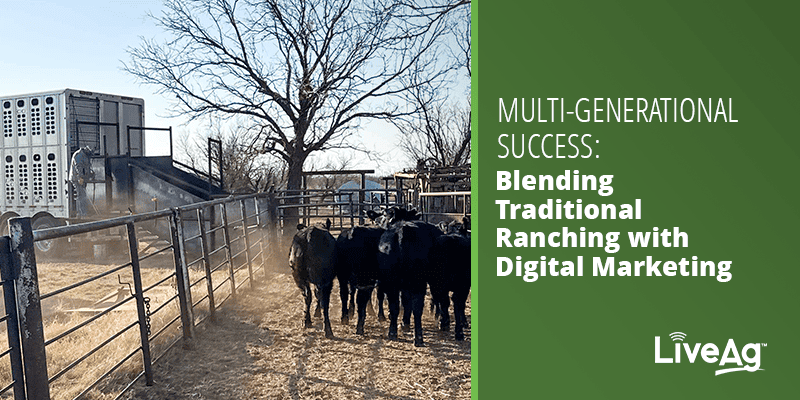
Multi-Generational Success: Blending Traditional Ranching with Digital Marketing
Multigenerational farming is a common thread among the U.S. cattle industry, allowing families to pass down resources and knowledge, livelihoods and legacies from one generation to the next. With the passing of time comes a considerable amount of change, though. While transformational, many ranchers are being faced with the challenge of adapting to new trends while maintaining the traditional values of hard work, integrity, and quality livestock production.
For over a century, the Thompson family of Eastern Idaho has experienced firsthand the importance of finding this balance in their own operation. Matt Thompson, a fourth-generation rancher and owner of Thompson Cattle, not only continues his family’s legacy but also embraces modern marketing techniques through a newfound relationship with LiveAg, a digital auction platform revolutionizing livestock and equipment sales.
The Thompson family’s roots in the ranching industry date as far back as the 19th century. While much of the family’s early history during that time has been lost, Matt clearly recalls stories of his great-grandfather who picked up the family, along with a booming sheep operation, and moved from Utah to Idaho in 1910. Initially focused on raising sheep, the Thompson family eventually transitioned entirely to cattle in the mid-1980s due to market challenges and personal health concerns.
“Unfortunately, my grandfather got Parkinson’s Disease and couldn’t farm anymore,” says Matt, who also serves as a LiveAg representative. “The sheep prices were really tough in the 80s, and my dad wasn’t into sheep anyways, so we made the switch and have been running cattle ever since.”
Today, the ranch remains a family endeavor, with Matt and his brother managing the operation alongside their sons. While passing down the family’s land is important to the brothers, they stress that carrying on the values of resilience and adaptability, alongside the lessons learned through decades of experience, have become a central focus to the Thompson family. Matt says that being able to incorporate modern ideas from the next generation with traditional forms of ranching is what makes multi-generational farming so unique to an operation’s business model.
Technology moves forward
Over the decades, the cattle industry has undergone significant advancements, especially in technology and marketing.
“When we started, everything was horse and buggy and word of mouth,” Matt says. “Now, we have cell phones, laptops, and video auctions. We’re still using horses for ranch work, but technology has made a huge impact on how we operate.”
Matt claims that one of the most significant advancements affecting his business has been the transition from in-person livestock sales to video auctions. The days of mailing in Super 8 video cassettes have been replaced with recording on a cell phone and uploading videos via a smartphone app. These digital tools allow producers to reach a broader audience with little effort, thereby securing better pricing for their cattle.
“Video auctions let us keep the cattle on the ranch until they’re sold, giving us more control over their condition and market timing,” Matt explains. “Instead of waiting for a sale day and hoping for the best, we can sell in late summer for fall delivery, which usually means capturing better market prices.”
To reach the full potential of digital marketing in such a broad marketplace, however, producers must have the responsibility and integrity to deliver what buyers have purchased. Even in the digital age, Matt emphasizes that relationships and networking still matter.
“It’s not just about putting your cattle online; it’s about building trust with buyers and ensuring that you consistently produce top-quality livestock. When you become known for good cattle, your business will boom from that reputation and buyers will come back time and time again. So, video auctions give you a great opportunity to increase your bottom line.”
Value added programs increase marketability
Matt has added value to his own herd by utilizing a blend of generational wisdom with progressive genetics and breeding programs.
“We’re using name-brand genetics that buyers recognize, and we’ve adopted value-added programs that help us stand out in the market,” Matt says. “These changes have made a significant financial impact, allowing us to stay competitive.”
While technological advancements have enhanced efficiency, not all ranchers are quick to embrace digital marketing. Some small-scale producers struggle to take advantage of video marketing due to the scale required for video auctions.
Recognizing this challenge, Matt and his colleagues strive to educate fellow producers on the benefits of modern sales strategies. The shift to digital isn’t just about technology — it’s about understanding how buyers interact in the current marketplace and positioning cattle accordingly. The ability to track buyer preferences, implement strategic sales timing, and ensure transparency in transactions has become a key factor in staying ahead.
Matt’s journey into video auctions began many years ago with repping cattle through other video auction companies before transitioning to LiveAg under the leadership of Dennis Metzger. He says what drew him to LiveAg was the team’s unmatched industry experience, innovative ideas, and commitment to personalized service.
“The people behind LiveAg have been in the industry for years,” Matt explains. “They know how to market cattle effectively, connect sellers with the right buyers, and provide a level of service that bigger platforms often can’t. One of the main reasons I started marketing cattle is to help people utilize resources and strategies they weren’t doing or didn’t even know existed.”
How the LiveAg approach differentiates
LiveAg’s approach allows for regularly monthly video auctions, ensuring that each lot receives the attention it deserves. Producers are connected with a knowledgeable team that understands the nuances of cattle marketing and will ensure that every lot is presented to the right audience.
“Some companies run through hundreds of thousands of cattle over multiple days, and after a while, they all start to blend together,” Matt says. “With LiveAg, we’re able to market cattle in a way that highlights their unique qualities.”
Additionally, with LiveAg, producers have the ability to leverage online marketing tactics beyond their traditional networks, such as search engine optimization (SEO) and targeted social media advertising. Therefore, even small and mid-sized operations can expand their audience and compete on a national scale.
Looking ahead, Matt believes digital marketing will continue to play a crucial role in the livestock industry. The integration of technology, from electronic IDs to online exchanges, is already revolutionizing how ranchers do business regarding both day-to-day operations and long-term goals.
While the digital frontier in livestock sales is just beginning to take shape, those who embrace the shift early will be positioned for long-term success.
“I see the cream rising to the top,” Matt predicts. “Producers who focus on quality genetics and value-added programs will be rewarded. In the future, platforms like LiveAg will open new opportunities for ranchers of all sizes as well.”
Ranchers who embrace a nationwide buyer base set their operations up for better financial stability through new revenue streams and data. LiveAg and other digital platforms are already helping producers move in this direction, allowing them to refine their marketing strategies in real-time.
For those hesitant to embrace digital marketing, Matt offers simple advice.
“Trust the process and use every tool available to add value to your cattle,” he says. “The right marketing strategy can mean the difference between treading water and turning a profit.”
As the cattle industry continues to evolve, the Thompson family’s story is a testament to the power of blending traditional ranching with digital marketing. By leveraging resources like LiveAg while staying true to their roots, they are securing a sustainable future for years to come. The future of ranching will belong to those who recognize the importance of both legacy and technology, using them in tandem to create success in an ever-changing marketplace.
Written by Cara Moore, Tennesee Farmers Co-op